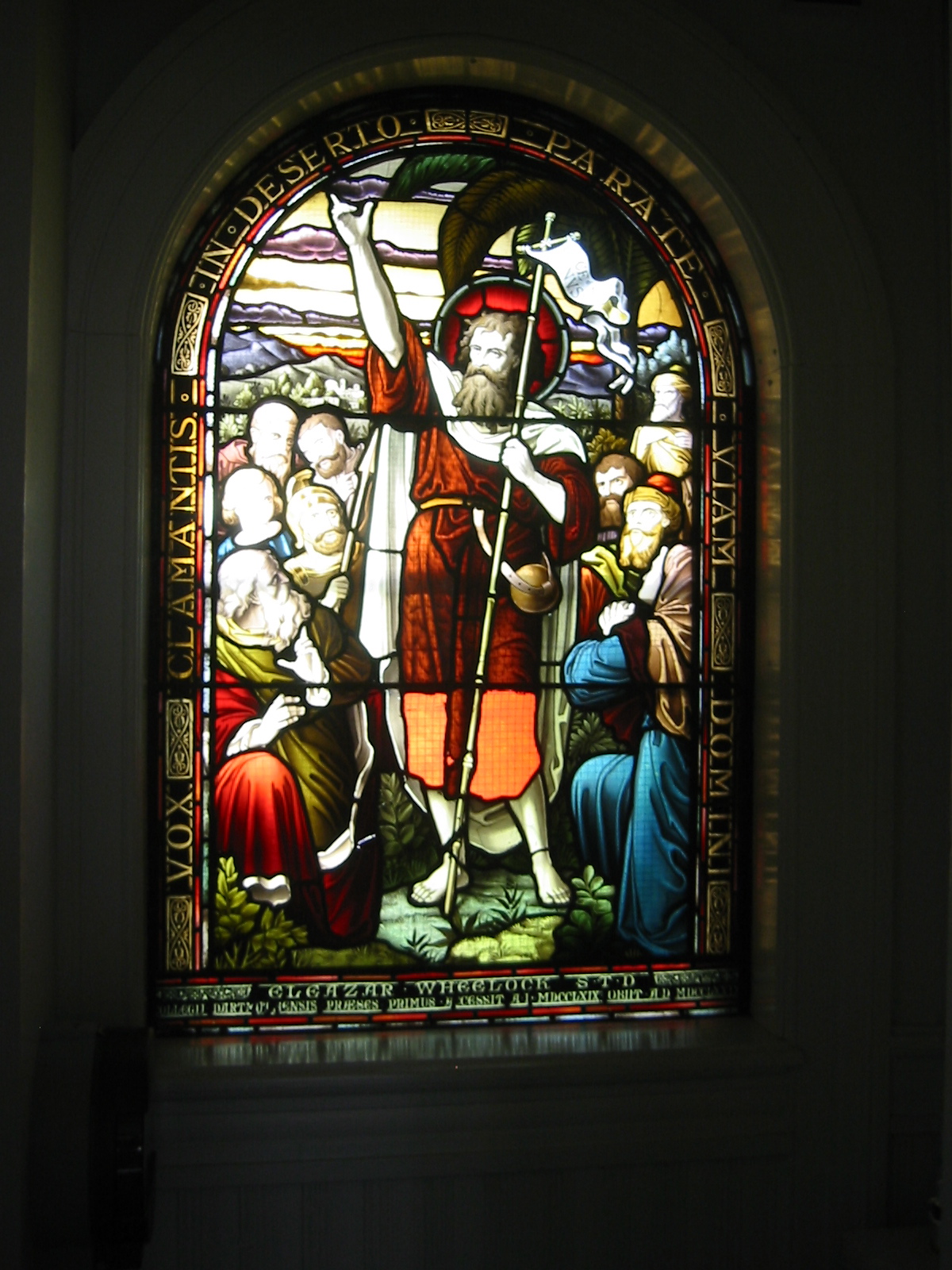
The seeming underuse of Rollins Chapel prompts one to ask whether it is finally time to devote the building to a more productive function; whether Dartmouth, without damaging the building or making a change that cannot be undone, should use Rollins for some purpose that serves the academic mission of the school.
Rollins would make a fantastic library reading room or simply a study space, for example. Students would actually have a reason to experience the building on a regular basis and appreciate its recent restoration.
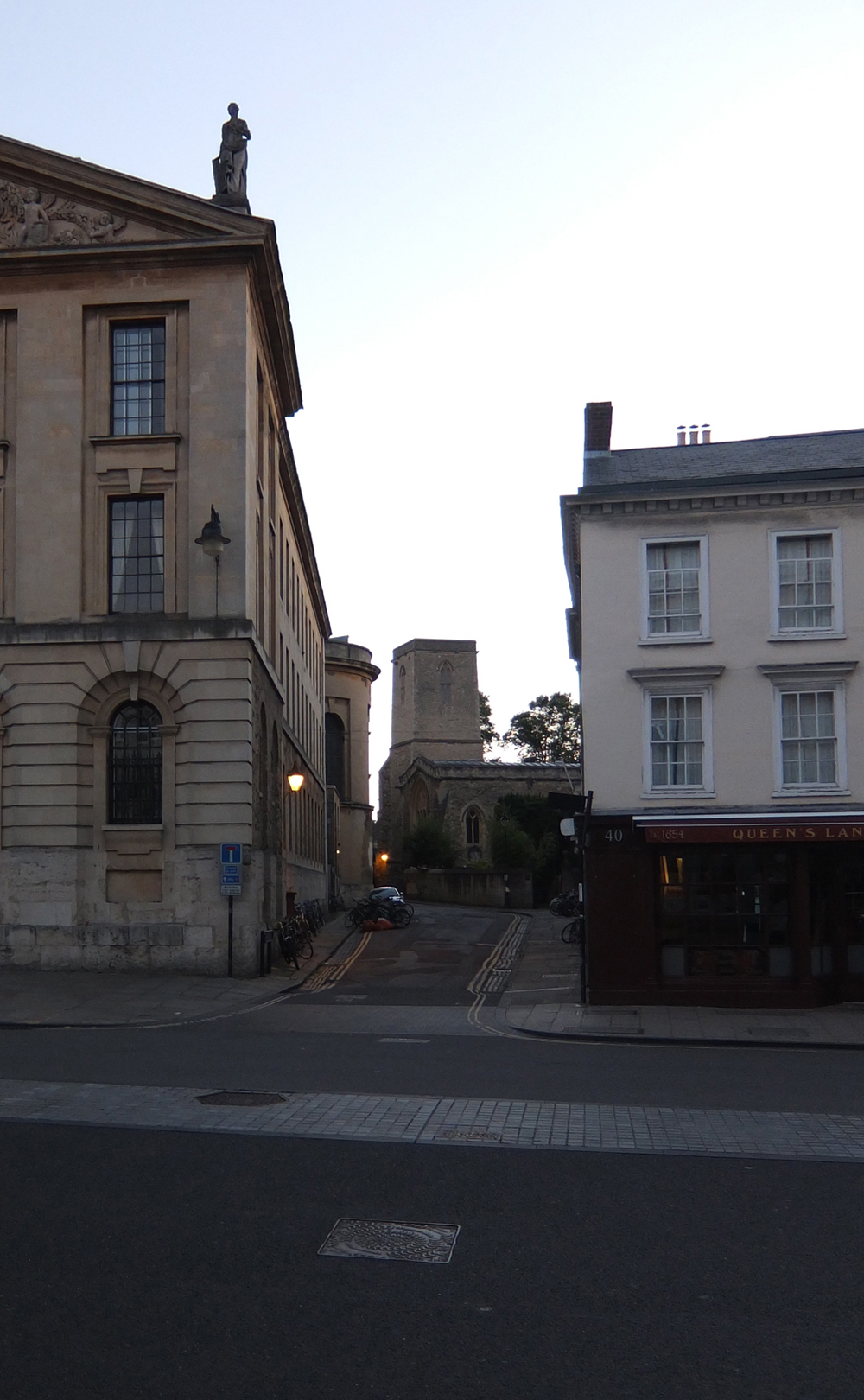
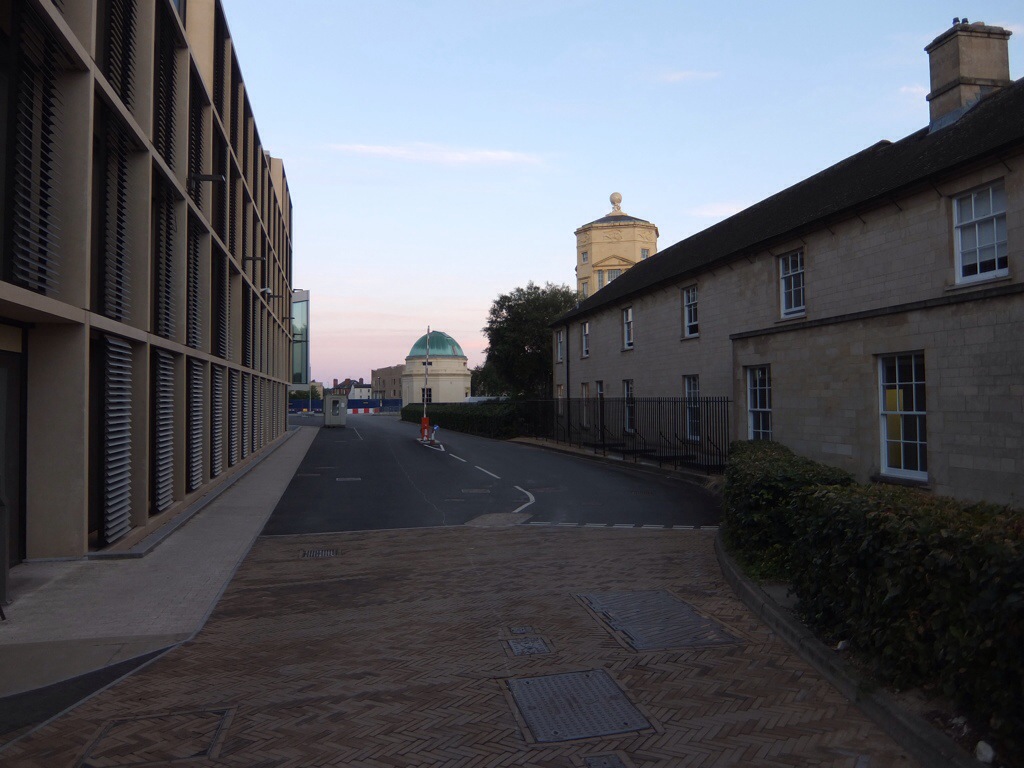
Churches have been turned into libraries at Haverford College in Pennsylvania (below); at St. Edmund’s Hall in Oxford (St. Peter in the East, see interior photo provided by the college); and at Lincoln College in Oxford (All Saints Church, see interior photo by Martin Beek). And from the photos (more), the Modernist bookstore inserted by Merkx + Girod into a 13th century church in Maastricht is simply astounding.
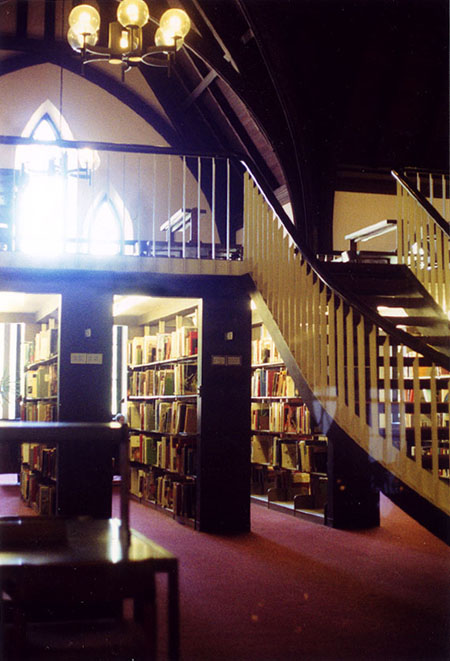 Haverford College library interior.
Dartmouth would continue to provide worship space, especially for student religious groups that do not have independent student centers and denominational chapels somewhere in town. There is little reason, however, for this generic worship space to occupy a prime site at the heart of a secular institution. To use its resources efficiently and help keep its most-used buildings within ten minutes of the Green, Dartmouth could easily justify the removal of its official worship space to a site that is relatively cheap and distant.
Dartmouth might consider building a noble and uplifting timber-framed building, simple and undecorated — perhaps in the form of an octagonal or round barn (Wikipedia), a vast English aisled barn (like Harmondsworth Great Barn, in Wikipedia), or a discount version of Thorncrown Chapel. The building might stand between EKT and Tri-Delt, or it could occupy one of the vacant sites west of the President’s House. It would be the sort of place where alums could hold weddings and the college could hold memorials.
Once the new hall opens, the college could sensitively furnish Rollins as a study space, like the ’02 Room, or as a new home for one of the smaller libraries.
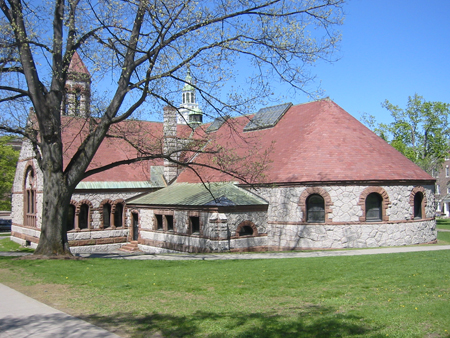 Rollins Chapel. See also the excellent interior photo by Stephanie Wales.
Removing the recent interior lights from the roof trusses would take Rollins closer to its original appearance, and replacing the existing movable chairs with high-quality lighted study tables or carrels would make Rollins into a highly useful building.
——
[Update 05.12.2013: Broken link to Merkx-Girod replaced, additional Maastricht photo link added.]
[Update 11.04.2012: Jacobs Consultancy, a firm working with the college on the new master plan, provides
detailed analysis and feasibility testing of the activities and occupants of a facility or complex, coupled with the analysis of existing buildings, their current, plus potential capabilities and capacities. This process identifies shortfalls and excesses in spaces controlled by various occupant groups, and suggests “highest and best use” scenarios with matches and mismatches by current occupants.
It will be interesting to see what they say about Rollins Chapel.]