-
Sasaki Associates now has a page for its House Centers “pilot” program. This SCUP article has a “housing swarm” image that Sasaki created for Dartmouth. A Valley News article states that the college “estimated it will cost $12.8 million to build professors’ residences and temporary centers for Dartmouth’s Undergraduate House Communities program.” But those have already been built. Presumably that estimate refers to completed construction. Any future, permanent versions of those buildings will cost a lot more than $13 million.
-
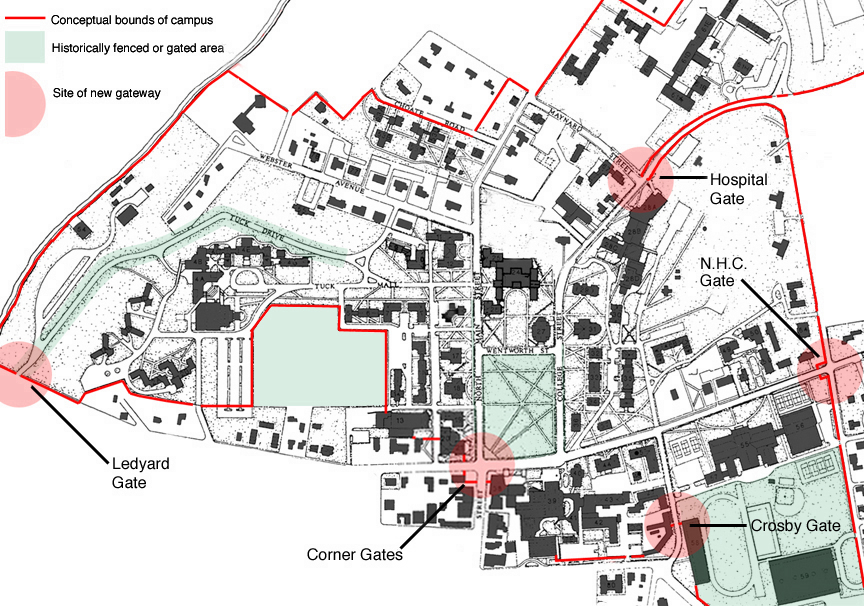
BBB has updated its page on the campus master plan to include a large version of that plan, an image of the West End plan (Green to Blue), and — this is new — a schematic perspective rendering of the cemetery bridge, which we can call Fletcher Viaduct.
-
This Valley News article notes Kendal’s interest in building to the south on Rivercrest land and leaving the Chieftain land for recreation (rowing).
-
Sir John Soane’s Museum in London has a computer model of the museum on line.
-
The architects have completed a design for the Irving Institute (Valley News).
-
The Dartmouth has an article on the success of the Town fence in front of Collis in reducing jaywalking.
-
The Hood has a brochure on public art on campus. The Class of 1965 has proposed to erect a statue of DOC founder Fred Harris in front of Robinson Hall. The campus architecture committee is considering the idea, according to the ’65 newsletter.
-
A bit of biography on David Hooke, who’s at the center of the new Moosilauke Ravine Lodge.
-
Dartmouth will play Brown at football in Fenway Park on November 10, Big Green Alert reports. Wild.
-
The Rauner Library Blog has a post about the Charter.
-
Kresge Library in Fairchild has turned 40 years old.
-
This Times editorial contains footnotes. Kinda neat, but also showy: if footnotes are needed here, why not everywhere? Or if the paper is to be relied on generally, why include notes here?
-
Big Green Alert points out the new use of the Lone Pine logo by the Co-Op. First impression? The trad typeface clashes with the fat Modernism of the pine. The use of the athletics nickname BIG GREEN in this seal-like, college-wide institutional device is also weird.
-
A Proliferation of Canes. Photos of the most recent Commencement show students carrying many strange, new-ish canes, most presumably representing senior societies. They feature a snake wrapped around a Native American arrow; a bearded old man; the domed main body of Shattuck Observatory (clever!); a snake clutching an apple in its mouth; a huge phoenix (for Phoenix, obviously — is that cast resin or something?); a tail, perhaps belonging to a whale?; and a three-dimensional stylization of the stylized Lone Pine symbol (also a metal globe).
-
Two interesting new-ish concepts: literary geography and forensic architecture.
A statue of Fred Harris? And other tidbits
Reply